Self Managing Rental Property: Where the Ceiling Is | Valta Homes Blog
Property Management Tips
Self Managing Rental Property: Where the Ceiling Is
Self managing rental property works until strategy and repairs compete for the same hours. See where the ceiling is, what the law asks and when to hand off.
Self managing rental property works well when you live close, own one unit and have open time. It starts to strain when you add doors, distance or guests. At that point the limit is not hours. Strategy and repairs are two jobs, and one person doing both keeps interrupting each one.
Picture the 9 p.m. message. A five-star weekend guest cannot get the smart lock to take their code. You are at dinner, phone out, toggling the app, deciding whether to drive over or talk them through a battery swap, with the review clock running. That moment is the normal shape of running a live short-term rental yourself. The owners who struggle with it are rarely lazy. They are the pricing analyst, the guest concierge, the turnover coordinator and the on-call tech in the same afternoon.
One "small" issue, a dozen buried decisions
A guest reports a cloudy hot tub on the morning of a fully booked weekend. That is not one task. Is it a chemistry problem you can talk the cleaner through, a filter to replace, or a pump starting to fail? Do you offer a late checkout, or a partial refund, or nothing? Which local vendor answers on a Saturday, and what does an emergency visit cost next to the booking?
Stack a season on top. The AC that should be serviced before the first July heat wave, not during it. The deck that needs re-staining before the rains turn a cosmetic job into a rot repair. A dishwasher a guest says is leaking mid-stay: fix it, swap it, or shut it off and edit the listing until a part arrives? Each one hides a chain of calls about diagnosis, cost, vendor and guest experience.
None of these calls is impossible. The problem is that you make every one of them, often while driving to the property or doing the repair yourself.
DIY property management: attention is a single channel
Planning and doing are different jobs, and you cannot give your best to both in the same stretch of time. A day of hauling linens, chasing a plumber and staging a unit leaves plenty of energy to approve a payout and none to rethink peak-season rates. Flip it around and the same wall appears: a morning in occupancy data and a permit question, and climbing under a sink that afternoon feels like a penalty.
For an owner doing it all, that wall is the real ceiling. It is not the number of hours in the day. It is the number of times you can switch between the thinking seat and the doing seat before the quality of both slides.
The Washington Eviction Process: A King County Landlord's Step-by-Step Guide
Washington's eviction process runs through the courts and takes two to four months. Here is every step for King County landlords: the correct notice, the unlawful detainer filing, the resolution program, and what it costs.
Say you are deep in a rate model, testing what a two-night minimum does to shoulder-season revenue, and a guest reports a stuck patio door. You save the sheet, drive out, fix the door, and by the time you sit back down the line of reasoning is gone. You lose the ninety minutes at the property, plus the time it takes to rebuild your focus, plus the quality of a decision you now make in a hurry.
Repeat that three times in a day and the growth work, the analysis that would lift income, never gets a clean run. Fighting fires feels productive, and the planning that would prevent the next fire keeps moving to later.
How many properties can one person manage?
There is no fixed number, and no source we know of gives a reliable one. The answer depends on three things:
Distance. A rental ten minutes away is a different job from one across the Sound.
Rental type. A furnished short-term rental has frequent turnovers, guest messages and pricing changes. A long-term rental with one tenant for a year is much quieter.
Your other commitments. A full-time job leaves little room for an emergency call.
A useful test is to ask what happens in a week when two things break at once. If the honest answer is that something waits too long or gets done badly, you have reached your ceiling at that number of properties.
What the law asks of you as a landlord
When you self manage a long-term rental in Washington, you carry the landlord's duties yourself. Under RCW 59.18.060 from the Washington State Legislature, those include keeping the premises fit for habitation, making necessary repairs, keeping electrical, plumbing, heating and appliances in working order, and keeping the dwelling reasonably weathertight. Rent increases need at least 90 days' written notice under RCW 59.18.140, and the amount is capped; see how much rent you can charge.
Two duties catch self-managing owners out. First, smoke detection: under RCW 43.44.110, the owner installs the devices in a rental, the tenant maintains them, and at a vacancy the owner must make sure the device works before the next tenant moves in. RCW 59.18.060 also requires a signed written notice about the device. Second, unpaid rent: RCW 59.12.030 sets a 14-day period after a written pay-or-vacate notice for tenancies under the landlord-tenant act. A tenant who stays after that period is still removed only through the court process, so get legal advice before you act.
Owners do not need a real estate license to deal with their own property. RCW 18.85.151 exempts a person acting for their own account. A manager who does the work for you, for pay, is a different case, as the post on whether a property manager is worth it explains. This is general information as of 2026, not legal advice.
What a real team separates
The answer is not to move faster. It is to stop loading one person with both roles. A management team splits the thinking from the doing so neither interrupts the other. One side owns the decisions, the other does the work.
In practice, the choices are settled before anyone arrives with tools: what is urgent, what it is worth spending, whether it is handled today or scheduled. The person on site then carries out the plan instead of weighing options in a hardware aisle. That planning only happens when someone is shielded from the day's interruptions.
Self manage or hire: where the line sits
Running your own rental in Seattle or Bellevue works with one nearby property and open time. The line is crossed when you add doors, distance, or hotel-level expectations from short-term guests.
Handing off the doing is not giving up control. It buys back the hours for decisions that compound: how the property is priced, positioned and protected over a season. When owners compare what property management costs, the real comparison is rarely fees against free. It is fees against the hours you spend on a screwdriver. You can test it with the property management cost calculator.
It can be, if you live near the rental, own one or two stable units and are comfortable with Washington landlord-tenant law. It saves the management fee. The cost is your time, plus the risk of a mistake with a tenant or a guest.
Can I manage my own rental property in Washington without a license?
Yes. RCW 18.85.151 exempts a person dealing with property for their own account from the real estate license requirement. You still have the landlord's legal duties, including repairs and proper notice.
How many rental properties can one person manage?
It depends on distance, rental type and your other commitments. Short-term rentals take far more attention per property than a long-term lease.
Is a property manager worth it?
When the fee costs less than the hours, vacancy and risk you would otherwise carry, yes. Our guide on is a property manager worth it walks through the comparison.

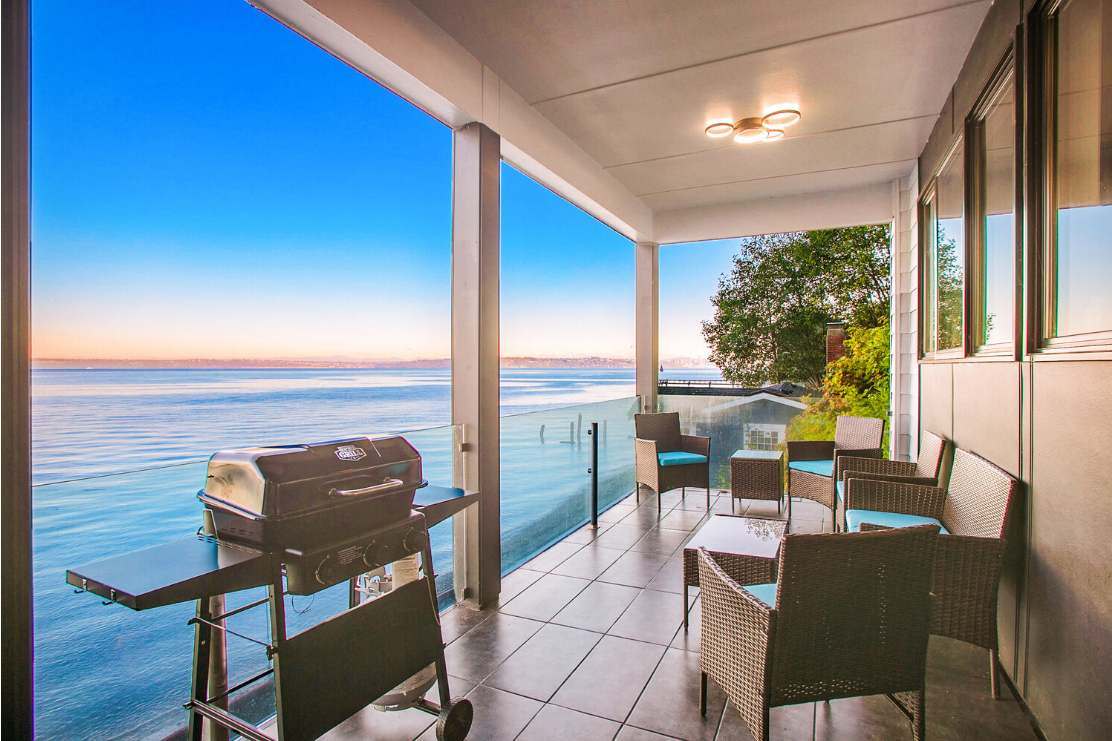 A home we manage: Rolling Bay Villa on Bainbridge Island.


